Wednesday, October 29, 2014

Cooperation Vs. Competition


Even though we are only at the end of October, November marks the time that most of us begin to think about the impending holiday season. This should be a period marked with thankfulness, joy and compassion for our friends, family and professional acquaintances, but it is often marred by stress, chaos, hustle and bustle.

While we understandably have competitors in business, the silver lining here is that this situation provides us with an opportunity to reflect on our personal and business relationships and analyze the level of competition in our lives.

Businesses, including countertop fabrication and related industries, are born of competition, and it is argued that this competition is what makes us stronger, pushes us to develop new, innovative products and provide the highest levels of customer service. Those who win the competition rise to the top, and those who fail eventually sputter out and die. While this is true to a certain extent, a new breed of consultants has put forth the proposition that all businesses require higher levels of cooperation than they do competition.

This line of thinking goes along with the business advice of finding your particular niche and sticking with it, and cooperating with businesses that are supposed to be your competitors is nothing new. Before making my way into the world of countertop fabrication, I worked closely with some of the most successful privately owned appliance dealers in the nation, and I noticed that most of them were willing to lend a hand to competitors in their markets when they found themselves in a sticky situation.

Of course, you can only provide so much help before it becomes a major detriment, but the business owners who practiced cooperation understood that one day they may also need a little help in providing their customers the best service possible. These cooperative businesses were never worried about losing sales or giving others a helping hand because they were all secure in their respective niche. They had successfully convinced their customers that their products and services are unique, and this is the true struggle that business owners must face.

As the year progresses, think about how you can cooperate with your competitors to the advantage of both businesses rather than setting out to crush them. In the long run, most companies find they are better off after engaging in cooperative efforts. Perhaps you are already working with your competitors on some level.

Thursday, October 16, 2014

An Early Look at 2015 Kitchen Trends

Although we are still in the autumn of 2014, most of us are already looking at what 2015 has in store for us. Much of our business depends on being able to accurately predict the latest trends, and many people are already taking a shot at what will be popular for new and redesigned homes next year. You can see a lot of the new products at this great website for countertop information, but that is the now - what is the future?

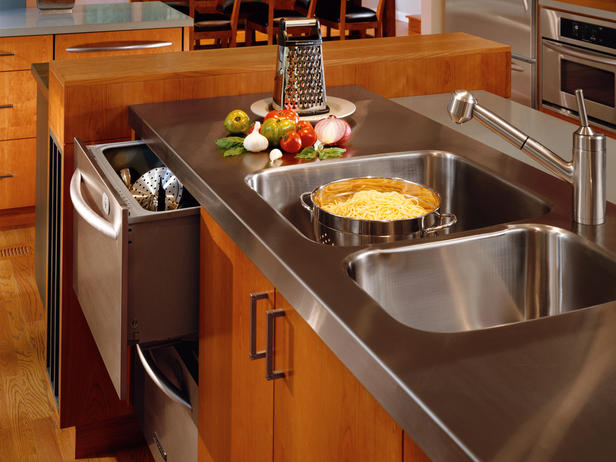
When it comes to kitchens, several opinions are floating around news outlets and blogs, and countertops are not going unnoticed. According to HGTV’s 9 Hot Trends for Today’s Kitchens , homeowners are moving away from continuous counters that fit around the perimeter and instead prefer freestanding pieces and island countertops. This is because the kitchen is being seen less as a utilitarian room for cooking but more as another type of living space. In addition, many people are now in the market for artistic upgrades to make their kitchens unique, and recycled materials, such as those containing depression-era glass, are becoming popular.

HGTV goes on to name the Top Countertop Materials for the Kitchen. Granite makes the list for being timeless, durable and easy to clean while some modern kitchens now have stainless steel countertops because they are nonporous, do not have to be sealed and resist bacterial growth. Another countertop material that is gaining popularity, according to HGTV, is butcher block, which is said to add warmth and rustic elegance.
ince_kitchenview1_lg
Although marble is often considered too soft for kitchens, it is beloved by bakers and adds an element of glamour. Another material that is gaining widespread popularity is concrete. These countertops are versatile and can be designed and dyed to complement any décor. Finally, quartz is the countertop material of choice for many because of its stain and scratch resistance and its uniform look.

An article published by LowesEmployees.com, Kitchen Trends or Kitchen Nightmares? Remodeling for 2015 covers remodeling trends for the coming year. Most kitchen remodels now include a change in countertops, and to corroborate HGTV, granite and quartz are the most popular choices. However, marble and tile countertops are close behind. In addition, countertops are increasingly being seen as an important element of the “kitchen triangle,” which is the busy space between the sink, range and refrigerator.

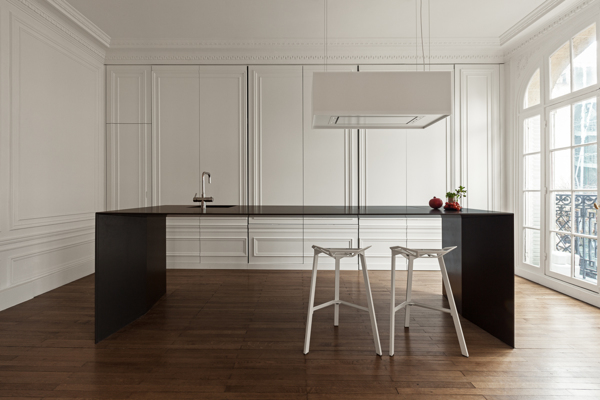
Another source of early kitchen trends for 2015 is Sharon’s Style Portfolio, the official blog of Sharon McCormick Design, LLC, in Durham, Conn. According to McCormick, the ultra-minimalist kitchen is starting to make waves. These so-called “invisible kitchens” were popularized by the Dutch Architectural firm known as i29 and show only a low profile countertop that is only a few centimeters thick, a faucet and a sink. All other fixtures and appliances are hidden behind sliding wall panels.
i29-Invisible-Kitchen
When it comes to countertops, McCormick proclaims that textured surfaces, such as leathered granite are gaining a foothold. She also asserts, like many of the others, that metal countertops, including stainless steel and copper are extremely popular. Last December, we ran a story about EOS Surfaces, distributed by Wilsonart, which is a copper-enhanced surfacing material that kills 99.9 percent of bacteria within two hours of exposure. This material is so popular that production is estimated to take more than a year to catch up with orders, and it has yet to be released for residential use.

Another trend recently reported by Realty Today, is the use of black and other dark colors in the kitchen. While this is not new for 2015, it seems to be catching on in the mainstream, especially with younger homeowners who are moving away from the old, sterile white of the parents and grandparents. In an interview with the Wall Street Journal on the subject, Maria Stapperfenne, president of the National Kitchen & Bath Association (NKBA), said, “People aren’t afraid of the dark.”

New York architect Richard Sammons of Fairfax & Sammons stated, “Dark materials create atmosphere. They are a corrective antidote to the antiseptic quality of the 20th-century white-enameled kitchen or the professional stainless steel kitchen so recently in vogue.”

While we do not profess to have the ability to see the future, we do take into consideration the attempts of all others. What do you believe 2015 has in store for the kitchen and countertop industry?

Tuesday, September 30, 2014

From Spring Cleaning to Fall Maintenance

We all know that spring is the traditional time to clean out your home and garage after being tucked snugly inside and restricted primarily to our homes over the winter months. And summer is a busy time for both work and family. But autumn is the season to fortify, batten down the hatches and prepare for the cold winter months ahead. As it is for our homes, our businesses have similar seasonal duties that must be attended to ensure smooth operations.

For most of us, October signals the start of our fourth quarter of business for the year, and it is important to allot as much of our time during this quarter to ensuring that we have a successful and profitable new year right from the start. In many cases, business may slow during the winter, but even if it doesn't, we have to work as if it is our busiest season. The best way to handle the fourth quarter is to set aside tasks that should be completed each week or each month.

Many of the tasks we must perform at this time of year are planning related. This is the time to set goals and identify potential obstacles. The first of the goals that come to my mind is a sales or revenue goal. The trick in setting this goal is to aim high while maintaining a sense of realism. You don't want to sell you and your staff short, but you also don't want to make it impossible to hit the target.

One way to increase sales and revenue is to advertise effectively and implement sound marketing strategies, but in order to accomplish this, we must first analyze how our marketing has worked for us for this year. Has it worked as well as you had expected? Is your advertising budget being spent effectively? What are some of the alternatives available?

A proven method for analyzing your marketing strategies is known as the SWOT method, which stands for strengths, weaknesses, opportunities and threats. This usually refers to your own business, but it can also be applied to specific approaches to marketing. When applied to your company, SWOT helps you develop your strategy for the coming year. When you apply SWOT to specific marketing techniques or providers, the method helps you determine a true value, and the key word here is opportunity.

The fourth quarter is the perfect time to identify new opportunities that will help you achieve your goals for the coming year. If we can be of any service to you, don't hesitate to let us know. I look forward to hearing from you, and good luck in carrying out your fall maintenance at home and on the job.

Wednesday, September 17, 2014

Adapted: An Insider's Perspective on Backlighting Translucent Surfaces

By Richard Ashoff
Note: In this blog entry, Richard Ashoff, CEO of Tylerco, Inc. sheds some light on how his SLABlite product for backlighting translucent surfaces works.
With the growing interest in backlighting translucent materials, such as onyx, glass and certain types of quartz surfacing and solid surface, a lot of questions have been coming up. In an effort to help you understand the ins and outs of the process better, specifically as it relates to our SLABlite product, I have put together this blog post.

Lumens
What are lumens and have you ever been concerned about them before? Lumens per sq. ft. would refer to lights that are used to illuminate commercial areas. There are requirements that lights have to meet for building codes. However, talking about lumens really just confuses the issue and really has nothing to do with backlighting surfaces.

There are many ways lighting translucent material can be achieved. You can use light bulbs, fluorescent lamps, LED strips or LED tape, and many companies have tried them all. However, more goes into lighting translucent surfaces than the actual lights. When backlighting surfaces, the first objective is to enhance the translucence of the material being illuminated. The SLABlite is designed to throw light 1 inch. We don’t care about the rest of the environment. That is why lumens are really beside the point.

Translucent material has to be backlit as if the sun were shining through it. There can be no hot spots or shadowing. The SLABlite’s foundation is based on a light guide. A light guide is the same technology that is used to light cellphones, computer monitors, TVs and signs. You would think that this would be easy enough to do. Unfortunately, you can’t just take the light guide technology and throw it under a slab and think it will work or last for any amount of time.

 An average LED bulb is stated to last 50,000 hours. That is the equivalent to 5 to 7 years of continuous burn. This would be acceptable if you could easily replace the bulb, but having to replace a bulb that is under an installed heavy slab is definitely NOT easy. So, we engineered the SLABlite for an increased lifespan – a minimum lifespan of 20 years. Because we are only trying to light 1 inch away from our light (the translucent slab material), we drive our LEDs at a lesser rate, which gives us a longer life. It also reduces the heat output from the LEDs. Heat is the enemy when dealing with LEDs.

What If?
Another issue is potential failure of an LED. The SLABlite’s LEDs are wired in parallel and in series on the same panel. If an LED were to fail, the whole panel will not fail, and the other LEDs will fill the gap. The SLABlite also has a surge protector on board. You never know when there might be a surge on the electrical line. We design protection and backup so you don’t have to get a jackhammer to remove the light.

Ease of use is also an important factor. SLABlite can be custom cut on the jobsite to fit any configuration. That means you never have to send out your template to have a pre-made configuration made for a particular application. The SLABlite is modular. You can build as big or as small as you want. When you have covered the area, you simply cut the panels to fit. You can drill holes for faucets and cut around sinks as easily as cutting plastic.

Additionally, the SLABlite is waterproof. It has been installed in pools, fountains, baths, boats and cement. Rather than using a potting method to seal the LEDs in a panel, SLABlite includes patented waterproofing that allows for heat contraction and expansion. SLABlite waterproofing avoids problems that occur from natural heat expansion and contraction, which can cause LEDs to separate from the panel and expose them to the elements.

SLABlites have been in the field for more than seven years, passing the 1 million hours of burn rate in 2010. We are proud to say that we have never lost a panel. Not one.

So, when you are looking for a product, make sure you are looking at a product that was made to do what it is being used for and not a product made for another type of lighting that has been adapted for your surfaces. You may think you have a less expensive product you can adapt, but an adapted product is usually a poor substitute that will cost you aggravation and a lot of money in the end. The one made for a specific use has taken into consideration things that could happen during its lifetime and has built-in solutions for potential problems that could arise. Sometimes “cheap” isn’t.

Thanks to Tylerco for sharing their expertise on backlighting,

Wednesday, August 27, 2014

Communication Is Key in the Business World

Two of the most powerful forces in the world are communication and transportation. It is the technological advances in these two areas that have driven human progress over the past century. As we are able to transport our products and ourselves more quickly and affordably, new markets and entire countries have opened for business and personal improvement. The automobile and airplane have made far-off places more accessible.

Although communication is not as physically tangible as transportation, it is arguably the more powerful of the two. I recently ran across a meme through a social media outlet explaining that asking people where they are is a relatively new phenomenon. It struck me as a simple and honest way to remind us that it was not so long ago when it was impossible to communicate with someone unless he or she was nearby.

Communicating over long distances emerged and was found to have incredible advantages that would soon become indispensable for life in the modern world. Smoke signals and the Pony Express gave way to the telegraph, the telephone and radio communications. And now, we have the Internet, email and mobile phones, all of which are driving today's business world. Yet, many people choose not to use these tools to their advantage. I am amazed at how many countertop companies don't even have a website! 

A survey conducted by Job Outlook showed the number one skill employers want in their employees is the ability to communicate. This exceeds even honesty (#2) and having a strong work ethic (#4). Communication is vital to so many aspects of a business. It is required by employers and employees to assess situations and conduct operations, it is essential to communicate with vendors and suppliers to ensure the raw materials and goods we need to do business are available and it is vital to acquiring new clients and ensuring the satisfaction of past ones.

Communicating effectively makes all the difference between a successful company and a failure, and you can give your business an upper hand by using all of the channels available to you. I have made communications my business, working with CountertopResource.com, so I know just how important (and tricky) it can be navigating the variety of pathways now available.  

Of course, I urge you to communicate via our Website by posting responses to the various pieces of information we share on a regular basis, or even contact us about the communication outlets we offer. But more importantly, I hope you take some time to assess where you are communicating effectively or not.  

Brian

Saturday, August 9, 2014

U.S. Granite - Why the Lack of Popularity?

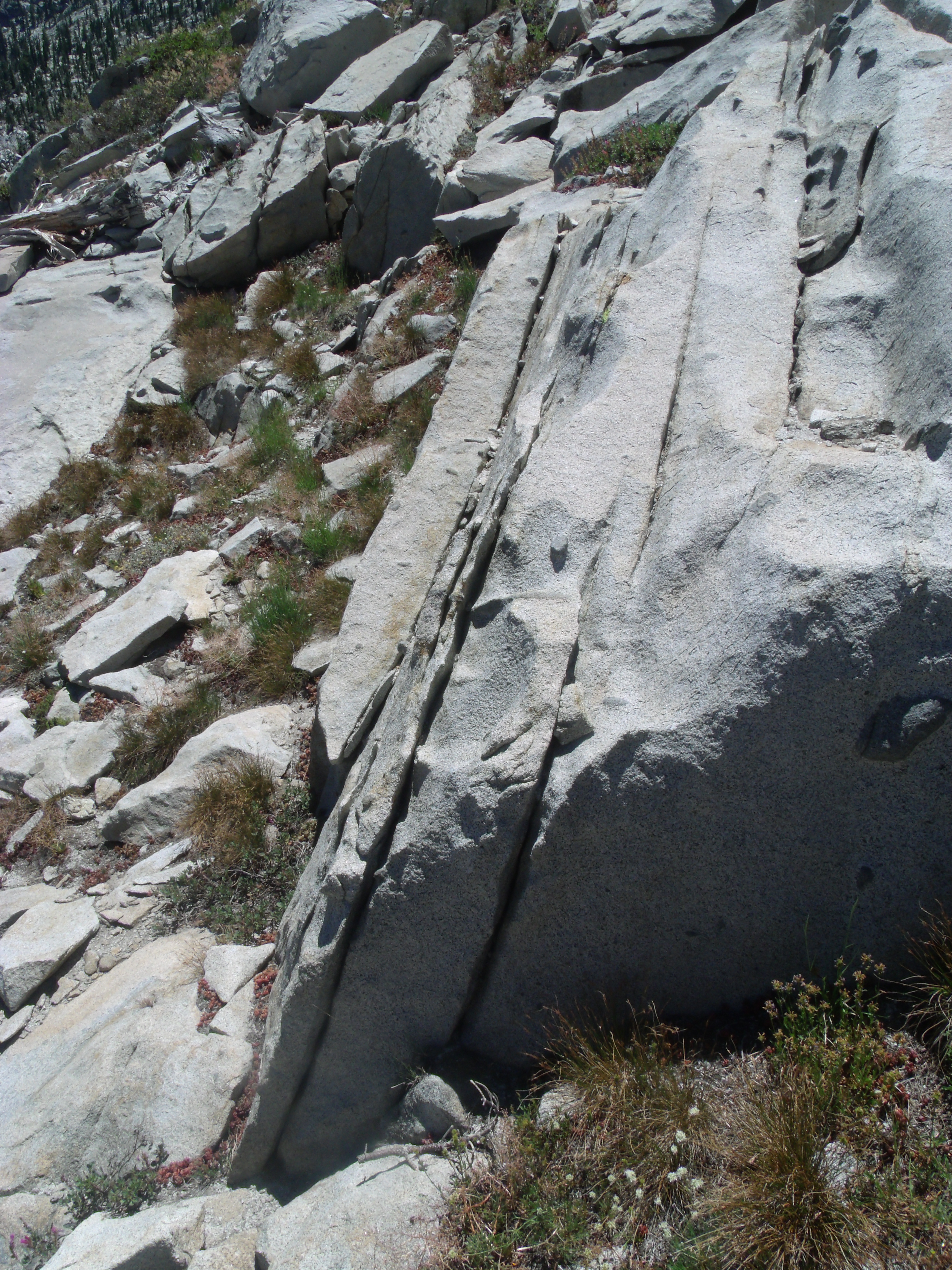
I recently returned from a camping trip in Northern California’s Trinity Alps and was awestruck by the natural beauty of these lands located north of Weaverville and southwest of sprawling, ominous Mt. Shasta. As I hiked up the cliffs overlooking the aptly named Granite Lake, it struck me that the natural forces of the earth could produce such a magnificent material and that human hands and ingenuity could refine it into such an attractive yet practical product like a kitchen countertop.
After the hike, while floating on the lake with a cold beer, I wondered what, if anything, could be produced from the type of granite that surrounded me. Weaverville and the other small communities in the vicinity were born as mining towns during the gold rush, but many other mineral deposits could also be found.

GEDSC DIGITAL CAMERA
On the drive in, down Highway 3, it was apparent that crushed rock and gravel were dominant. Piles of rocks more than 100 ft. high stretched along the road for miles at a time, and after a short break, there continued several miles more of nothing but quarried, crushed rock.

Upon reflection, I noted the natural formations on the cliffs were mostly cracked and broken. And although some large veins of pure quartz sparkled fantastically in the sunlight, the granite was somewhat dull and less than lustrous. When I returned home, I put my research machine into action, and discovered that my hunch was correct. The granite deposits in the Trinity Alps had experienced tremendous pressure during their formation, and the compression made them unsuitable for use as dimension stone. So, if U.S. granite doesn’t come from here, then from where do we get our slabs?

The United States mines an exceptional amount of dimension granite and other dimension stone. In fact, this country is one of the leading producers of natural stone in the world, but this only makes it more shocking that our dimension stone imports average at about 80 percent of our consumption.
According to the 2014 report from the U.S. Geological Survey (USGS), 2.17 million tons of U.S. dimension stone valued at $460 million was sold or used in the U.S. in 2013. A total of 208 companies produced the stone from 276 quarries in 34 states, and the leading producers were Texas, Indiana and Wisconsin. In addition, the tonnage of dimension stone produced has been increasing each year since at least 2009, when the total was 1.62 million.

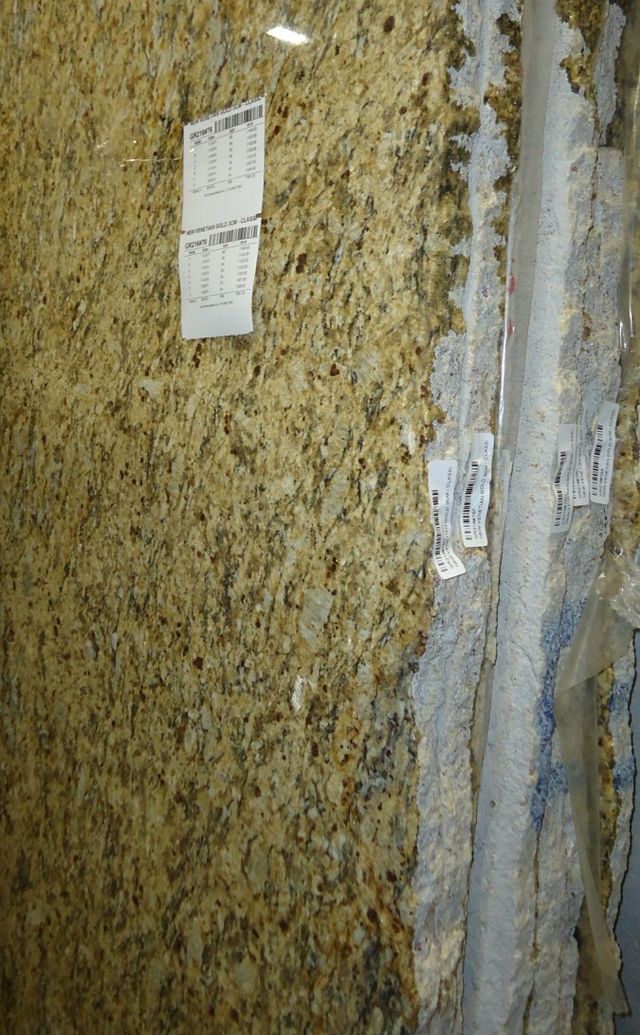
Granite_slabs_standing_vertically_in_a_warehouse
Although these numbers seem promising and look good without any comparisons, the $460 million of dimension stone used or sold by U.S. producers is dwarfed by the $1.86 billion in dimension stone imports.

Of the total dimension stone sold or used by U.S. producers in 2013, 41 percent was limestone, 23 percent granite, 15 percent sandstone, 3 percent marble, 2 percent slate and 15 percent miscellaneous. By value, 50 percent of this stone was dressed, and 46 percent of dressed stone was sold in partially squared pieces or slabs.

Looking more specifically at granite, 500,000 tons was produced in the U.S. by 39 companies operating 57 quarries in 15 states, and 80 percent of that was exported. The rest of the granite used in the U.S. was imported from Brazil (42 percent), China (23 percent), India (14 percent) and Italy (13 percent). Even with a median tariff of 3 percent on dimension stone, it still somehow makes more sense to go with the imports rather than with domestically produced stone.

Many environmentalists in the U.S. would agree that this country should be spared from increased mining, which could disrupt natural ecosystems and become an eyesore on the landscape. However, the environmental impact of transporting these slabs from halfway around the world could, arguably, be causing much more damage.

In addition, some reports have stated that some overseas granite operations are funding terrorism, and the granite coming from China is of inferior quality and cannot be used domestically.
So, what is it that makes granite imports so popular?

The leading factor, of course, is price, and following close behind is the fact that we do not have the infrastructure in place to meet such high demand. The United States is the world’s top market for dimension stone. Since the economy recovered, demand for dimension stone has increased not only for construction but also for use in existing structures.

Some people say that U.S. granite just doesn’t exhibit the vibrant and unique color patterns of imported stone, but is this truly the case? While certain colors and patterns are unique to locations overseas, it seems that the United States has slabs of equal or even greater brilliance.
Kurt Swenson, president of one of the largest granite quarries in the U.S., Rock of Ages in Vermont, says that much of the demand for overseas granite is black granite. However, some of this demand is for block granite or decorative granite that is to be etched, which is not typically done on slabs for countertops.

Chuck Monson, president of Dakota Granite, is in agreement with Swenson. He states that the demand for black granite rose when the U.S. decided to use such slabs imported from India to build the Vietnam Memorial. But again, he was referring to granite to be used for monuments and statues rather than countertops.

So, is it simply price that is driving the market for imports? Many U.S. granite producers think so. However, another factor may simply be ignorance by the average consumer. Perhaps an education campaign can bring U.S. production up and help to further stimulate our economy.

If you have any thoughts, questions or answers to those posed here, please post a response.

Thursday, July 31, 2014

Upswing in Economy and Construction Prompts Increases in Countertop Programming...

Although the latest reports show a slight economic downturn and a bit of a slowdown in construction in the second quarter, last year was a banner year for housing starts and completions, renovations and home sales. It is much too soon to begin worrying over the latest data, which states that the economy dropped by about 3 percent in the last quarter, because growth is still above what it was this time last year. In addition, while activity has decreased a little, forecasters had already predicted that this would occur and will be followed by slower, yet steady, growth through 2018.


New construction and a booming residential housing market have provided an unforeseen benefit other than an increase in sales for countertop fabricators, installers and suppliers. It has also prompted new countertop programming, expanded informational outlets and additional training events that are taking place across the country.

This year, IWF is not only featuring a full-day Countertop Symposium on August 19, one day before the regular show begins, but running throughout the course of IWF, August 20 - 23, is the Countertop Pavilion. The Countertop Symposium will include several CEU presentations and an annual industry forecast from ISFA while the Countertop Pavilion will offer networking events and access to industry vendors. Additionally, several educational sessions have been developed specifically for the countertop industry.

Also of note is the fact that StonExpo/Marmomacc Americas is bringing a new East Coast version of the trade show to Miami Beach, Fla., October 19 - 22. Like its West Coast predecessor, this event will also feature demos, new products and the latest information about trends from key manufacturers and suppliers in the industry, and the event will also feature several educational and networking opportunities.

Another great offering that recently began is the StoneTalk podcast, the first of its kind, produced by Moraware and hosted by the countertop software company's newest team member Patrick Foley. StoneTalk is already on its fifth episode, and guests have included Aaron Crowley of Crowley's Granite Concepts, Ted Sherritt of FLOFORM Countertops and Russ Berry, president of ASST and past ISFA president.

You'll be able to listen to each episode of StoneTalk on the show's dedicated website, through the Moraware blog and you can now also find them on the CountertopResource.com website. 

So here's to all that is going on. I hope you take advantage of the opportunities.