Wednesday, August 27, 2014

Communication Is Key in the Business World

Two of the most powerful forces in the world are communication and transportation. It is the technological advances in these two areas that have driven human progress over the past century. As we are able to transport our products and ourselves more quickly and affordably, new markets and entire countries have opened for business and personal improvement. The automobile and airplane have made far-off places more accessible.

Although communication is not as physically tangible as transportation, it is arguably the more powerful of the two. I recently ran across a meme through a social media outlet explaining that asking people where they are is a relatively new phenomenon. It struck me as a simple and honest way to remind us that it was not so long ago when it was impossible to communicate with someone unless he or she was nearby.

Communicating over long distances emerged and was found to have incredible advantages that would soon become indispensable for life in the modern world. Smoke signals and the Pony Express gave way to the telegraph, the telephone and radio communications. And now, we have the Internet, email and mobile phones, all of which are driving today's business world. Yet, many people choose not to use these tools to their advantage. I am amazed at how many countertop companies don't even have a website! 

A survey conducted by Job Outlook showed the number one skill employers want in their employees is the ability to communicate. This exceeds even honesty (#2) and having a strong work ethic (#4). Communication is vital to so many aspects of a business. It is required by employers and employees to assess situations and conduct operations, it is essential to communicate with vendors and suppliers to ensure the raw materials and goods we need to do business are available and it is vital to acquiring new clients and ensuring the satisfaction of past ones.

Communicating effectively makes all the difference between a successful company and a failure, and you can give your business an upper hand by using all of the channels available to you. I have made communications my business, working with CountertopResource.com, so I know just how important (and tricky) it can be navigating the variety of pathways now available.  

Of course, I urge you to communicate via our Website by posting responses to the various pieces of information we share on a regular basis, or even contact us about the communication outlets we offer. But more importantly, I hope you take some time to assess where you are communicating effectively or not.  

Brian

Saturday, August 9, 2014

U.S. Granite - Why the Lack of Popularity?

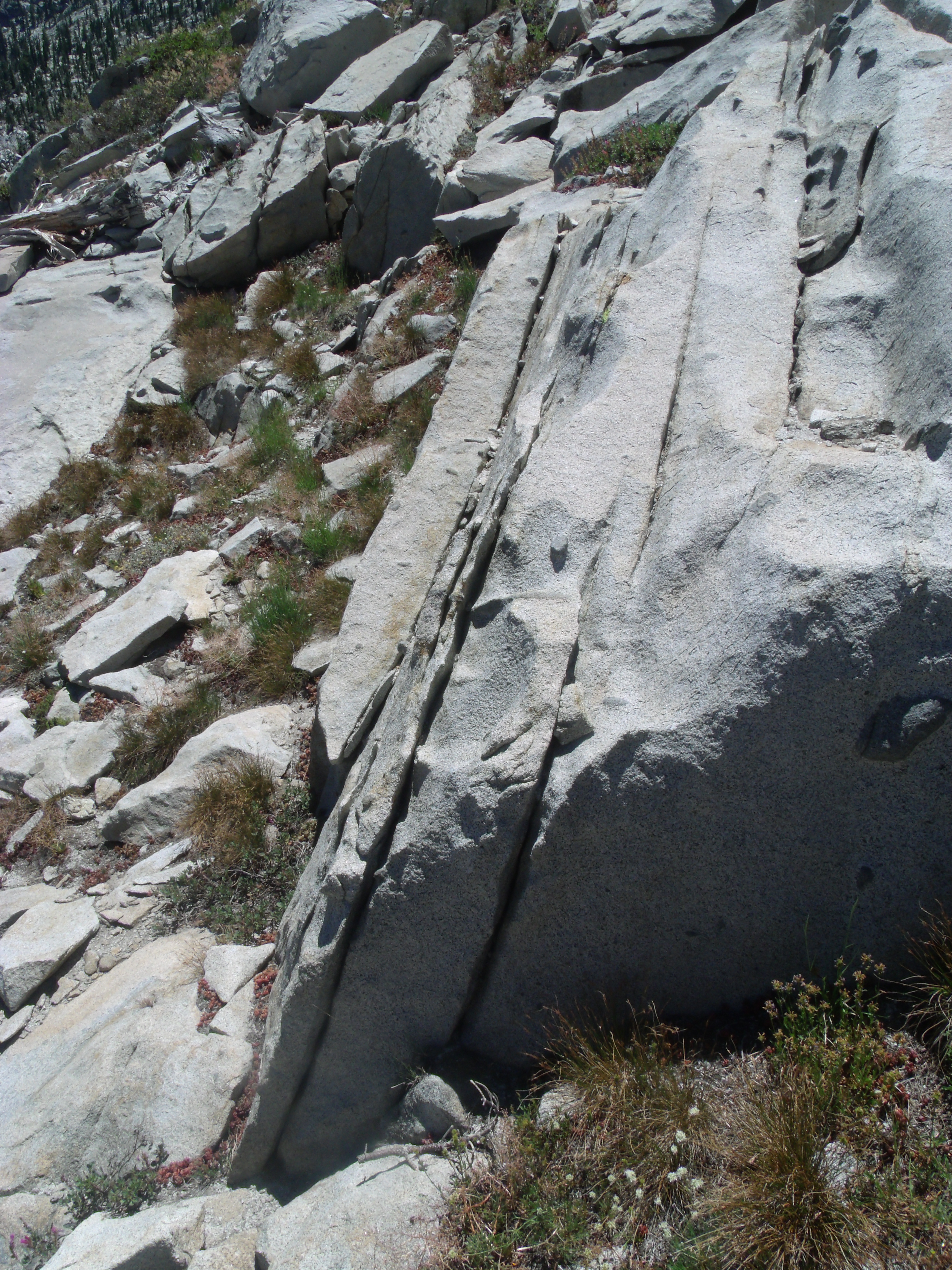
I recently returned from a camping trip in Northern California’s Trinity Alps and was awestruck by the natural beauty of these lands located north of Weaverville and southwest of sprawling, ominous Mt. Shasta. As I hiked up the cliffs overlooking the aptly named Granite Lake, it struck me that the natural forces of the earth could produce such a magnificent material and that human hands and ingenuity could refine it into such an attractive yet practical product like a kitchen countertop.
After the hike, while floating on the lake with a cold beer, I wondered what, if anything, could be produced from the type of granite that surrounded me. Weaverville and the other small communities in the vicinity were born as mining towns during the gold rush, but many other mineral deposits could also be found.

GEDSC DIGITAL CAMERA
On the drive in, down Highway 3, it was apparent that crushed rock and gravel were dominant. Piles of rocks more than 100 ft. high stretched along the road for miles at a time, and after a short break, there continued several miles more of nothing but quarried, crushed rock.

Upon reflection, I noted the natural formations on the cliffs were mostly cracked and broken. And although some large veins of pure quartz sparkled fantastically in the sunlight, the granite was somewhat dull and less than lustrous. When I returned home, I put my research machine into action, and discovered that my hunch was correct. The granite deposits in the Trinity Alps had experienced tremendous pressure during their formation, and the compression made them unsuitable for use as dimension stone. So, if U.S. granite doesn’t come from here, then from where do we get our slabs?

The United States mines an exceptional amount of dimension granite and other dimension stone. In fact, this country is one of the leading producers of natural stone in the world, but this only makes it more shocking that our dimension stone imports average at about 80 percent of our consumption.
According to the 2014 report from the U.S. Geological Survey (USGS), 2.17 million tons of U.S. dimension stone valued at $460 million was sold or used in the U.S. in 2013. A total of 208 companies produced the stone from 276 quarries in 34 states, and the leading producers were Texas, Indiana and Wisconsin. In addition, the tonnage of dimension stone produced has been increasing each year since at least 2009, when the total was 1.62 million.

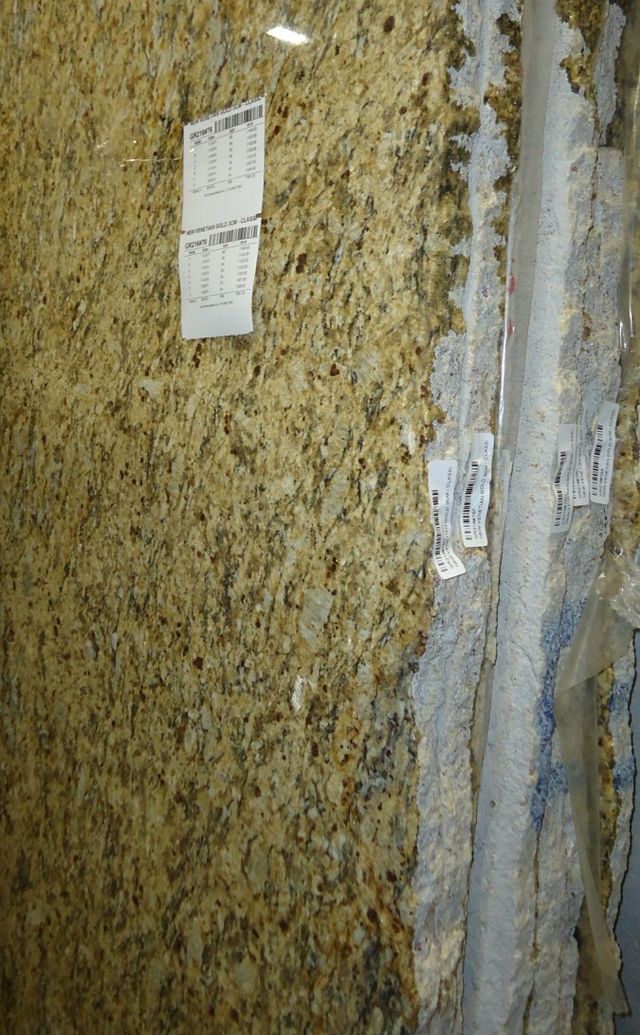
Granite_slabs_standing_vertically_in_a_warehouse
Although these numbers seem promising and look good without any comparisons, the $460 million of dimension stone used or sold by U.S. producers is dwarfed by the $1.86 billion in dimension stone imports.

Of the total dimension stone sold or used by U.S. producers in 2013, 41 percent was limestone, 23 percent granite, 15 percent sandstone, 3 percent marble, 2 percent slate and 15 percent miscellaneous. By value, 50 percent of this stone was dressed, and 46 percent of dressed stone was sold in partially squared pieces or slabs.

Looking more specifically at granite, 500,000 tons was produced in the U.S. by 39 companies operating 57 quarries in 15 states, and 80 percent of that was exported. The rest of the granite used in the U.S. was imported from Brazil (42 percent), China (23 percent), India (14 percent) and Italy (13 percent). Even with a median tariff of 3 percent on dimension stone, it still somehow makes more sense to go with the imports rather than with domestically produced stone.

Many environmentalists in the U.S. would agree that this country should be spared from increased mining, which could disrupt natural ecosystems and become an eyesore on the landscape. However, the environmental impact of transporting these slabs from halfway around the world could, arguably, be causing much more damage.

In addition, some reports have stated that some overseas granite operations are funding terrorism, and the granite coming from China is of inferior quality and cannot be used domestically.
So, what is it that makes granite imports so popular?

The leading factor, of course, is price, and following close behind is the fact that we do not have the infrastructure in place to meet such high demand. The United States is the world’s top market for dimension stone. Since the economy recovered, demand for dimension stone has increased not only for construction but also for use in existing structures.

Some people say that U.S. granite just doesn’t exhibit the vibrant and unique color patterns of imported stone, but is this truly the case? While certain colors and patterns are unique to locations overseas, it seems that the United States has slabs of equal or even greater brilliance.
Kurt Swenson, president of one of the largest granite quarries in the U.S., Rock of Ages in Vermont, says that much of the demand for overseas granite is black granite. However, some of this demand is for block granite or decorative granite that is to be etched, which is not typically done on slabs for countertops.

Chuck Monson, president of Dakota Granite, is in agreement with Swenson. He states that the demand for black granite rose when the U.S. decided to use such slabs imported from India to build the Vietnam Memorial. But again, he was referring to granite to be used for monuments and statues rather than countertops.

So, is it simply price that is driving the market for imports? Many U.S. granite producers think so. However, another factor may simply be ignorance by the average consumer. Perhaps an education campaign can bring U.S. production up and help to further stimulate our economy.

If you have any thoughts, questions or answers to those posed here, please post a response.

Thursday, July 31, 2014

Upswing in Economy and Construction Prompts Increases in Countertop Programming...

Although the latest reports show a slight economic downturn and a bit of a slowdown in construction in the second quarter, last year was a banner year for housing starts and completions, renovations and home sales. It is much too soon to begin worrying over the latest data, which states that the economy dropped by about 3 percent in the last quarter, because growth is still above what it was this time last year. In addition, while activity has decreased a little, forecasters had already predicted that this would occur and will be followed by slower, yet steady, growth through 2018.


New construction and a booming residential housing market have provided an unforeseen benefit other than an increase in sales for countertop fabricators, installers and suppliers. It has also prompted new countertop programming, expanded informational outlets and additional training events that are taking place across the country.

This year, IWF is not only featuring a full-day Countertop Symposium on August 19, one day before the regular show begins, but running throughout the course of IWF, August 20 - 23, is the Countertop Pavilion. The Countertop Symposium will include several CEU presentations and an annual industry forecast from ISFA while the Countertop Pavilion will offer networking events and access to industry vendors. Additionally, several educational sessions have been developed specifically for the countertop industry.

Also of note is the fact that StonExpo/Marmomacc Americas is bringing a new East Coast version of the trade show to Miami Beach, Fla., October 19 - 22. Like its West Coast predecessor, this event will also feature demos, new products and the latest information about trends from key manufacturers and suppliers in the industry, and the event will also feature several educational and networking opportunities.

Another great offering that recently began is the StoneTalk podcast, the first of its kind, produced by Moraware and hosted by the countertop software company's newest team member Patrick Foley. StoneTalk is already on its fifth episode, and guests have included Aaron Crowley of Crowley's Granite Concepts, Ted Sherritt of FLOFORM Countertops and Russ Berry, president of ASST and past ISFA president.

You'll be able to listen to each episode of StoneTalk on the show's dedicated website, through the Moraware blog and you can now also find them on the CountertopResource.com website. 

So here's to all that is going on. I hope you take advantage of the opportunities.

Sunday, July 13, 2014

New Podcast - StoneTalk - from Moraware Features Some of the Industry's Best

Recently, the founders of Moraware, Harry Hollander and Ted Pitts, along with new employee Patrick Foley, developed StoneTalk, a podcast featuring some of the most successful people in the world of countertops.

For those who are new to Internet media, a podcast is the online version of a radio broadcast. While some podcasts feature music, many of them are talk shows focused on specific interests, hobbies, demographics or industries. StoneTalk was officially launched in May after several months of development. The idea for the podcast came to Pitts earlier this year after he and Hollander met Foley at a software conference. The Moraware co-founders knew of Foley through the podcast he hosted while working for Microsoft: the Startup Success Podcast. After talking with Foley, he agreed to become part of the Moraware team as a software and support “generalist.”

One of his first projects was getting the new podcast off the ground as a “way to provide something of value to our customers and get our name in front of potential customers” without putting pressure on them to purchase anything. This philosophy was ingrained into Foley by the famed author and business consultant, Seth Godin, and Moraware had already been following it through informative blogging and social media posts. Foley believed StoneTalk was the perfect title for the show, and he was charged with planning, producing and hosting the new podcast. StoneTalk is now on its fourth episode, and it was been well received by the industry. According to Foley, they believed it would take about a full year for the podcast to gain a widespread audience, but within the first three months, it has been downloaded or played nearly 1,000 times.

Guests for the show are entrepreneurs and business professionals working in countertop fabrication, but Foley says that future episodes may feature general business consultants and industry vendors. They already include some well know guests as  Aaron Crowley of Crowley’s Granite Concepts; Liz Trambasco, industry expert and sales consultant, Ted Sherritt of FLOFORM Countertops; and Russ Berry of A.S.S.T.

Although StoneTalk and customer support takes up a good deal of Foley’s time at Moraware, he would eventually like to develop educational and instructional material for beginning countertop fabricators.

You watch all of the past episodes and read transcripts of them in the StoneTalk Archives on the Moraware website, but you are also able to find them at CountertopResource.com.

Take a look at them, and let us know what you think!

Thursday, June 26, 2014

Measure Twice, Cut Once: Two Years of CountertopResource.com and Counting...


This space is not reserved for bragging, and I'm sure you are not reading this to take in any self-serving braggadocio, but we are celebrating the two-year anniversary of our website CountertopResource.com and thought it could be beneficial to tell you a little about how we got here and what we have accomplished during those first two years.

As many of you know, starting a new business can be risky and frightening. However, many of these risks and fears can be mitigated through careful planning. An old carpenter's creedo says, "Measure twice, cut once," and that's the approach I took before launching CountertopResource.com.

I entered the countertop industry sideways as a freelance writer  specializing in business, law and finance, but over the years, I began accepting more and more assignments related to residential and commercial real estate, home building and general construction. Opportunities opened for me to act as a ghost writer for several industry publications, and I began to obsessively seek out as much information as I could about countertop manufacturing, fabrication and installation.

As my contacts, knowledge and assets grew, I discovered what I believed to be a gap in the informational and marketing resources available to manufacturers, fabricators and suppliers in the industry. However, I put off implementing my ideas until I was sure my research and calculations were accurate.

By the time CountertopResource.com was launched in July 2012, I had invested many years of my life learning about the resources the industry needed and what may help small business owners such as myself reach ever-greater stages of success.

When I finally 'made the cut' and officially launched the business, a lot of hard work was already behind me and a lot more lay ahead. That first year got off to a shaky start, but by years' end, we were in the black with several new prospects on the horizon. Not many businesses can boast such an achievement. In fact, according to Forbes, eight out of 10 start-ups fail within the first 18 months.

Our second year of business has shown a quick yet steady progression of viewers and clients, which has allowed us a little leeway to adjust our offerings, develop new features and bring you ever-better and increasingly relevant news. We even hired additional staff! Now, as our second year comes to a close, we are taking the advice of business experts and reflecting on our successes and shortcomings. The day-to-day activities are now under control as we have developed and implemented efficient practices and procedures.

We are now in that phase of operations where we can begin to work on the business instead of in the business, which means that we will have new and exciting features to help you make the most out of your business. It is not lost on any of us here at CountertopResource.com that we owe all of our success to you, our loyal readers and clients, and we hope we can help you make your businesses all they can be. Just remember, for every job and every project, measure twice before you make the cut.

Thanks for your support!

Thursday, May 29, 2014

The Approaching Summer Carries Predictions of Growth in New Construction

Summer is just a few short weeks away. The summer months have traditionally been a busy time for countertop fabricators and installers, which may work to distract us from outdoor activities, events and vacations. However, focusing on a steady flow of jobs during this season can be just as rewarding, if not more so.

 Some talk has been circulating about the slowdown in the U.S. housing market after sales took off in 2013. Fears of slipping back into a recession have arisen, but it seems that deeper analysis of the situation may indicate that these fears hold no merit. The jump in sales in 2013 was necessary for the market to catch up to where it should be, and now, housing sales and new construction are expected to increase slowly and steadily through 2018, according to experts.

Two of the reasons for the current slowdown are rising mortgage rates and a decreasing inventory of existing homes. Residential property investors have been buying up existing structures before prices begin to rise, but this activity has spurred new construction in many markets that were hit hard during the recession, including Phoenix, Atlanta and several cities in Texas.

As the housing market continues to recover, this summer is a great time to focus on current jobs while preparing for the strong possibility of new construction approaching. Of course, it never hurts to temper work with trips to the beach, camping, backyard barbeques or even a trip to an exotic location. So, I'd like to wish you all an enjoyable yet prosperous summer, and it would be great to hear from you about what you are expecting for your business in the near future.

Thursday, May 15, 2014

Expansion of Clean Water Act May Affect Homebuilders

At the end of March, the Environmental Protection Agency (EPA) and the Army Corps of Engineers released a long-awaited proposal to clarify the wording of the Clean Water Act, which is designed to protect rivers, wetlands and other waterways from erosion and other damage caused by human activity. However, not everyone is happy about the new proposed rule, including the National Association of Home Builders (NAHB). Two decisions made by the U.S. Supreme Court in the last 15 years limited the Clean Water Act and muddied the waters, so to speak, over exactly which waterways fall under federal jurisdiction. Since those decisions, organizations regulated under the act and the EPA have been going mad trying to sort out exactly who is to regulated and by which layer of government: federal, state or local.

For years, a multitude of large corporations, professional organizations, government agencies and environmentalist have been calling for the rule to be revised so that it provides more clarity and guidance. According to the EPA, this is exactly what the proposed rule is doing. However, several detractors say that the proposed rule unfairly expands the jurisdiction of the EPA, will drastically increase costs and cause delays in permitting without a proportional benefit.

One of the strongest voices in opposition to the proposed rule is the NAHB, which has been asking for the new rule for several years now. Kevin Kelly, president of the NAHB, said the drafted rule does not do what it was meant to accomplish.

“Instead, EPA has added just about everything into its jurisdiction by expanding the definition of a ‘tributary’ – even ditches and manmade canals, or any other feature that a regulator determines to have a bed, bank and high-water mark. It’s a waste of taxpayer resources to treat a rainwater ditch with the same scrutiny as we would the Delaware Bay,” stated Kelly in a press release.

 Kelly also stated that the expansion of authority under the new rule would require larger numbers of developers and construction projects to obtain permits, which will delay or halt construction projects. This, in turn, will directly affect countertop fabricators who provided products for new construction or even remodeling projects, including small, single-family home projects. In addition, the new rule will increase the costs of construction for developers.

The EPA, however, does not agree on some of these points. According to the EPA’s website, the Waters of the United States Proposed Rule reduces confusion about the Clean Water Act and clarifies which types of waters are covered under it. The website also states that the rule does not protect new types of waters, does not expand jurisdiction over ditches and does not broaden coverage of the Act.

What the EPA does admit is that the Act is associated with higher costs, most of which will be paid by land developers and the agriculture industry. Even though all of the current exemptions remain in place, the new rule is expected to cost between $134 million to $231 million. The EPA is justifying these costs through an analysis showing that the expected benefits of the rule are in the range of $301 million to $398 million, which will go toward protecting the ecosystem by providing stable habitats supportive of biodiversity, preventing erosion, allowing for the free flow of groundwater and reducing flooding.

This new rule is certainly more divisive than most organizations and government agencies had predicted. Alliances have been formed on both sides. The agriculture and land development industries are pushing back fiercely while several bodies are aligning with the EPA, including the American Sustainable Business Council (ASBC), National Farmers Union and the Center for Rural Affairs.

In accordance with standard practice, the EPA has established a 90-day period for public comments, which is open until July 21, 2014. To read more about the rule and how it may affect your business and to enter a public comment, visit the EPA web page concerning the changes to the Clean Water Act.